
Structured Implementation from Planning Through Go-Live
ERP Implementation Process in Canton for organizations transitioning to modern financial management systems with minimal operational disruption
Transitioning from legacy systems or spreadsheet-based workflows to integrated ERP platforms creates anxiety about data loss, staff learning curves, and disruption during critical reporting periods. RDA Systems follows a structured implementation methodology in Canton and nationwide that phases discovery, configuration, testing, and training to maintain business continuity throughout the transition. Organizations discover that methodical planning and stakeholder collaboration prevent the chaos that accompanies rushed implementations or vendors who deploy generic configurations without understanding your specific workflows.
Project discovery establishes which fund structures, payroll rules, procurement workflows, and reporting requirements must transfer from your current system, and implementation specialists document every chart of accounts mapping, user role definition, and approval hierarchy before any data migration begins. This discovery phase identifies potential conflicts early—duplicate vendor records, inconsistent fund coding, or undefined approval thresholds—allowing resolution before these issues compound during go-live.
Arrange an implementation consultation to review your current systems and establish a realistic project timeline.
How Implementation Addresses Transition Complexity
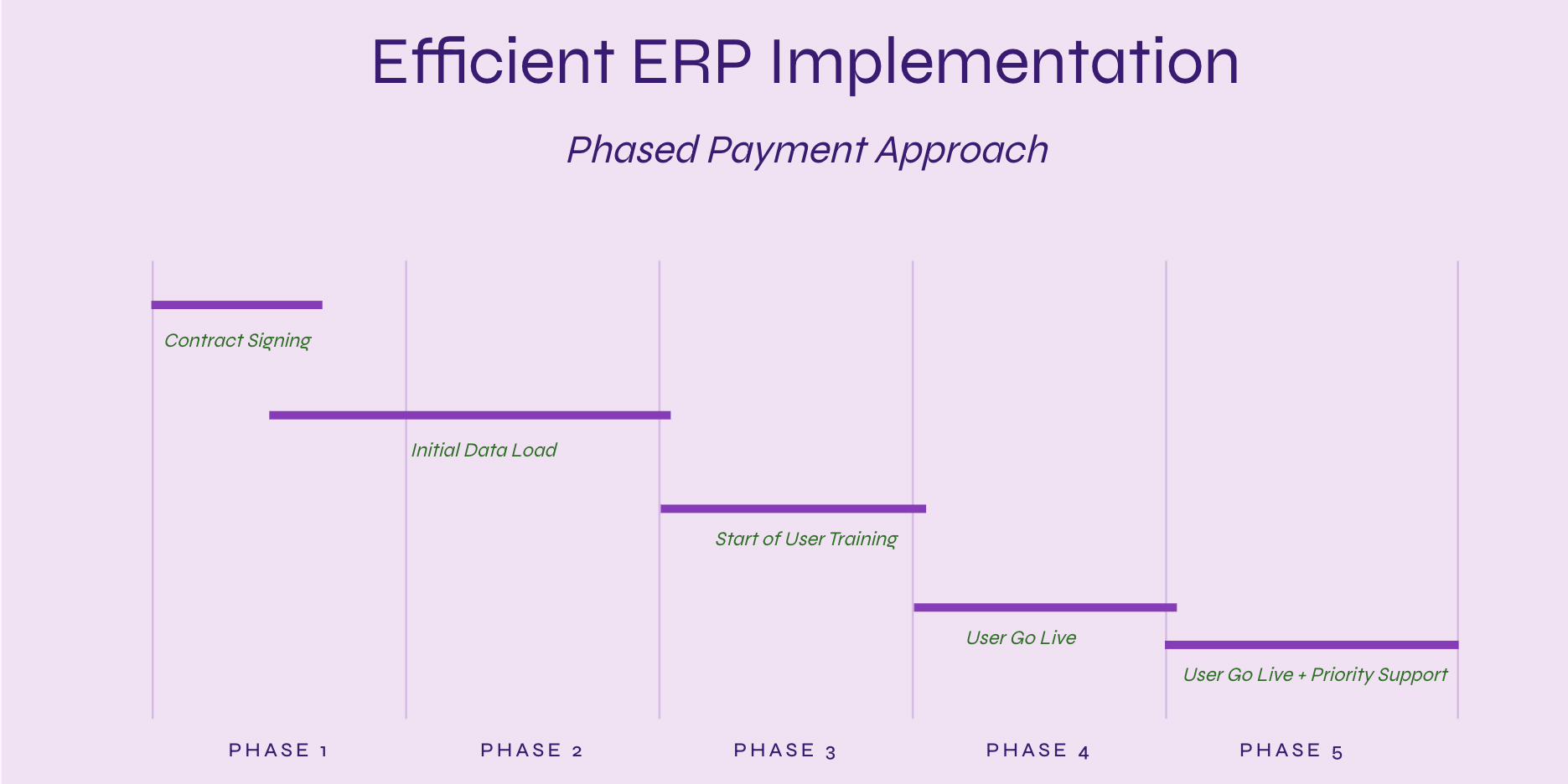
Data migration involves more than transferring balances from old systems—implementation teams validate vendor records against payment history, reconcile fund balances across fiscal years, and verify employee records match payroll tax filings before converting information into the new platform. Quality assurance testing runs parallel transactions through both old and new systems during a validation period, confirming that accounts payable workflows, payroll calculations, and financial reports produce identical results before staff commits to the new platform exclusively.
Staff training occurs in phases aligned with module deployment rather than overwhelming users with comprehensive training weeks before they access the system. Finance teams learn general ledger and accounts payable functions first, followed by procurement workflows once core accounting stabilizes, and HR administrators receive payroll training in time for the first live payroll cycle. This sequenced approach lets users apply training immediately while concepts remain fresh rather than relearning everything months later when actual work begins.
Post-launch support includes weekly check-ins during the first month, access to application specialists for configuration questions, and optimization reviews after the first full reporting cycle to refine workflows based on actual usage patterns. Change management guidance helps departments adjust approval processes, update internal procedures documentation, and communicate system changes to stakeholders who interact with requisitions, invoices, or budget reports.
Questions Before Starting Your Implementation
Organizations preparing for ERP transitions want clarity about timelines, resource requirements, and how implementations proceed without disrupting daily operations.
How long does a typical ERP implementation take from project kickoff to full go-live?
Timeline depends on the number of modules deployed and data complexity, but most organizations with core financials and payroll complete implementation within four to six months including discovery, testing, and training phases.
What happens to historical data from our current system during migration?
Historical transactions, vendor records, employee information, and fund balances transfer through secure conversion processes that validate accuracy before go-live, and organizations retain read-only access to legacy systems for audit reference during retention periods.
How much staff time does implementation require from our finance and HR teams?
Expect approximately 10-15 hours per week from key stakeholders during discovery and testing phases, with concentrated time during the two weeks before go-live for final validation and user acceptance testing.
Can implementation proceed during our busiest reporting periods, or should we wait?
Most organizations schedule go-live during less demanding periods—after annual reporting closes or between budget cycles—to give staff focus time for learning new workflows without year-end pressure.
What support does RDA provide if issues arise immediately after go-live in Canton or other service areas?
Dedicated implementation specialists remain assigned to your project for 90 days post-launch, providing priority response for configuration questions, workflow adjustments, and any data reconciliation needs that surface during initial operations.
Experienced implementation guidance throughout every phase ensures your ERP transition maintains business continuity and data integrity. RDA Systems provides the structured methodology and ongoing support that makes complex software deployments manageable for public sector organizations.